The Courage Prayer

Blessed God, I believe in the infinite wonder of your love. I believe in your courage. And I believe in the wisdom you pour upon us so bountifully that your seas and lands cannot contain it. Blessed God, I confess I am often confused. Yet I trust you. I trust you with all my heart and all my mind and all my strength and all my soul. There is a path for me. I hear you calling. Just for today, though, please hold my hand. Please help me find my courage. Thank you for the way you love us all. Amen.
--- from Jesus, December 3, 2007

A=Author, J=Jesus
Showing posts with label Pseudo-Dionysius. Show all posts

Friday, April 15, 2011

JR33: The Black Swans of Mysticism

A: You know what? I'm feeling pretty peeved this morning, and I have a lot of things I'd like to say about some of the mystical ideas we've been talking about this week. I think I know how the Gospel writer Mark must have felt when he first read Paul's First Corinthians. Some ticked!
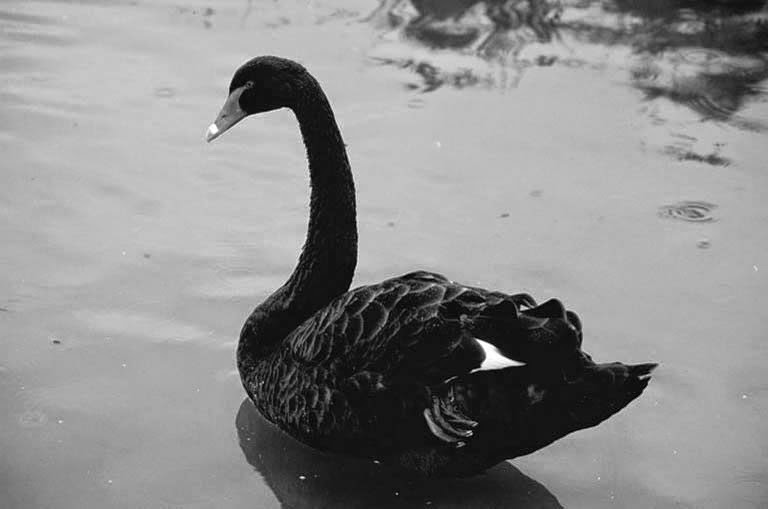
(c) Hemera Technologies 2001-2003


J (smiling): I'm all ears.

A: Thank you! All this talk about apophatic mystics and anagogic mystics has brought up some issues that have been bugging the heck out of me for years. But yesterday was the last straw. Yesterday I was in the mood to do some spring cleaning, so I tackled a pile of papers that needed to be filed. There I found a church newsletter from November 2010 with a review of Karen Armstrong's book The Spiral Staircase: My Climb Out of Darkness (Toronto: Random House-Vintage, 2004). The reviewer dutifully tried to capture the content of Armstrong's thesis about God, her discovery that "some of the most eminent Jewish, Christian, and Muslim theologians and mystics insisted that God was not an objective fact, was not another being, and not an unseen reality like the atom, whose existence could be empirically demonstrated. Some went so far as to say that it was better to say that God did not exist, because our notion of existence was too limited to apply to God." Oh yeah? thought I indignantly. The reviewer went on: "Most would agree with the Greek Orthodox that any statement about God has to have two characteristics. One is 'to remind us that God cannot be contained in a neat, coherent system of thought,' and the other, 'it should lead us to a moment of silent awe or wonder, because when speaking of the reality of God we are at the end of what words or thoughts can usefully do.'"

OH, YEAH? Really? That's the best you can do, huh? You're gonna just wimp out because intense emotions can't be explained by using pure logic? You're gonna just let yourselves off the hook that easily and give up on one of the best, most wondrous parts of the spiritual journey of redemption and transformation? You're gonna just listen to these dopey mystics? Get a life, people! And I mean that literally. Get a life, and then get back to me on the question of who God is.

And you apophatic mystics out there -- until you decide to get a whole life, a balanced life, a compassionate life, a forgiving life, I'm going to assume your biological brain circuits are seriously seized up in several crucial areas (your anterior cingulate, your amygdala, your orbitofrontal cortex, your right insular cortex, your caudate nucleus, and your hypothalamus). And if you think I'm wrong, then prove it to me. Volunteer to get your bran scanned. I've already had my brain scanned once. I'm game to go again. Show me your brain is healthy and fully functional and not damaged from psychoactive drug use. Then we'll talk.

J: As you've said -- and I totally agree -- there's no ethical mysticism without ethical scientific investigation.

A: I'm so upset about mystical claims that can't be substantiated or corroborated. I'm upset about the sloppiness of current scientific investigation into mysticism, too. I've looked at some of the criteria for different "Mysticism Scales" used by researchers. Researchers such as Hood want to know if potential mystics have had an experience of transcending themselves or losing themselves in an experience of oneness. But this is only one type of mysticism -- it's a measure of apophatic mysticism, an experience that's quite likely to be a highly dysfunctional dissociative disorder, not a true mystical state at all. There. I've said it. I think some of the highly revered mystics of the past have been severely dysfunctional. Especially the apophatic mystics -- the ones who claim to feel only a void and empty unity. There's something seriously wrong with a person's brain if all he or she can feel is an empty unity.

J: Yet this is the state of so-called transcendence that so many seekers have been taught to seek.

A: Well, it's not what I feel. And it's not what you felt. So I guess that makes you and me the Popperian "black swans" of falsifiability. And you're technically dead, which makes your soul mind pretty hard to study. So that leaves me, and others like me, as possible test subjects for a study of non-dysfunctional mysticism. Such a study can't come soon enough, as far as I'm concerned.

J: Unfortunately, such a study would only help distinguish between those whose brains are reasonably functional and those whose brains aren't. It would do nothing to identify the mystics of the past who were lying -- the ones who intentionally invented a mystical journey for their own narcissistic purposes.

A: Ah. Pseudo-Dionysius comes instantly to mind. Pseudo-Dionysius, the great 6th century CE apophatic-anagogic inventor of Christian mystical hierarchy. The inventor of Christian angelology. The inventor of mystical theology. The bolsterer of Neo-Platonic Christian thought. The bolsterer of mystical church authority for the church of the Byzantine Empire. The man who cemented the worst ideals of Platonic mysticism into a church that wanted to utterly eradicate all aspects of your own core teachings on inclusiveness, forgiveness, non-chosenness, and heart-based relationship with the Divine. You mean that kind of liar?

J: I mean that kind of liar.

A: As I said earlier, I think I know how Mark felt when he read what Paul wrote about you. If I were a cartoon character right now, I'd have steam coming out of my ears.

Wednesday, April 13, 2011

JR32: The Buddha Question

A: There's been a trend in the past few decades to try to equate your teachings with the teachings of the Buddha, to try to show that Jesus and Buddha were teaching the same universal truths. This trend seems particularly true of those who are interested in placing you among the apophatic mystics of Christian history -- mystics such as Gregory of Nyssa, Pseudo-Dionysius, the Cloud of Unknowing, and John of the Cross. Thomas Merton, a well-known Roman Catholic Trappist contemplative, was very interested in establishing a dialogue with Buddhist monks. What are your thoughts on the universality of faith and spiritual practice?


J (sighing): You've asked a very, very difficult question. There's no easy answer, but I'll try to express some of my thoughts. A book such as Thich Nhat Hanh's Living Buddha, Living Christ (New York: Berkley-Riverhead, 1995) is so beautiful and so kind and so sincere that I want to say I agree with everything he says. But I don't. I can't. I can't agree with the underlying premises, the underlying doctrines of Buddhist belief. On the other hand -- and this is where it gets very messy, very complicated -- I agree with a lot of the spiritual practices that Thich Nhat Hanh describes. I agree very much with the path of mindfulness and compassion. I agree with the desire to create communities of peace. I agree with the decision to take action to create positive change. These are aspects of faith that are, indeed, universal. I don't think anyone would disagree. No matter what religious tradition a person belongs to, the truest expression of faith -- the truest expression of humanity -- has always been a life lived with mindfulness, compassion, peace, and transformative change. This is true for Buddhists, Jews, Muslims, Christians, and other religions, as well. At any time and in any place there have been some Buddhists and some Jews and some Muslims and some Christians who've chosen, as individuals, to pursue the path of true faith. These are the people who've consciously tried to help heal communities, families, and individuals. They've chosen this path because they think it's the right thing to do.

A: You're placing the emphasis on individual choice rather than on formal religious beliefs or doctrines.

J: I'm drawing a very clear line here between religion and faith. Religion, as it's practised in major world religions today, including various schools of Buddhism and various schools of Christianity, is one of the biggest obstacles to faith. Faith -- by that I mean a relationship with God based on courage, trust, gratitude, and devotion -- is supposed to be an everyday part of life. An everyday experience. An everyday sense of belonging. A sense of belonging to Creation, belonging to God's family. It's the opposite of abandonment or estrangement from God. Faith is quiet acceptance. It's compassion. It's empathy. It's balance. It's wholeness. It's pure humbleness and contentment.

A: Religion doesn't teach this.

J: No. Religion gets in the way of this. It doesn't have to. In fact, the world would be a healthier place if people could meet each week on the Sabbath to express their faith and share their spiritual experiences together in a safe spiritual environment. This would be church at its best. Unfortunately, this isn't what church has become in the Western world. Church has become a place to centralize the authority of narcissistic, fear-mongering men and women. Church has become a place to take people farther away from God, not closer.

A: If you were incarnated as a human being today, would you turn to Buddhism for answers to the questions that Pauline Christianity doesn't answer very well?

J (sadly shaking his head): No. As I said earlier, Buddhism has some important things to say about spiritual practice -- about living the teachings of compassion and mindfulness each day, rather than just speaking them. There's more insistence in Buddhism on outward actions matching inward intent. And this is important. It's integrity, after all. Integrity is what you get when your inner choices match your outer actions. It's the opposite of hypocrisy. Integrity is an important part of peaceful community. I respect this underlying impulse in Buddhist thought.

A: Yet, based on what you've already said, you believe this underlying impulse towards daily practice and integrity is not specifically Buddhist. It's a universal part of true faith.
 
J: Yes. All human beings are born with this capacity. Unfortunately, like all aspects of human growth and learning, the capacity for mindful, compassionate practice can be lost. "Use it or lose it" -- that's how the human brain and central nervous system work. All human beings are born with the innate capacity to love and forgive, as well, but as experience shows, many individuals lose both. They lose both their ability to love and their ability to forgive. These individuals are the bullies, the psychopaths, and the narcissists. The same people who've been in charge of formal religious instruction in most parts of the world. 

“His disciples asked him: Is circumcision useful or not? He said to them: If it were useful, children’s fathers would produce them already circumcised from their mothers. On the other hand, the true circumcision of spirit is entirely valuable” (Gospel of Thomas 53 a-b). A person of faith who commits to a daily practice of courage, trust, gratitude, and devotion in all relationships will inevitably outgrow the "spiritual skin" he or she started out with. This is normal and healthy. In fact, it will happen several times over the course of a person's spiritual journey if heart, mind, body, and talent are always kept in balance. On the other hand, the bullies and narcissists of the world never grow big enough in heart or mind to need a new skin. Photo credit JAT 2025.

A: I get that part. But why do you feel uncomfortable with the trend towards having your teachings conflated with the Buddha's teachings?

J: It's the cosmology. It's the core assumptions. I don't agree with either. How could I? I mean, it would be ludicrous for an angel speaking from the Other Side in partnership with a human mystic to claim there is no God. Buddhism, after all, is a non-theistic religion. In Buddhism, there's a belief in an ultimate reality, but this reality isn't a person in the way that you and I talk about God the Mother and God the Father as actual identifiable people -- unique, distinct, and both very, very big. Buddhism also rejects the idea of an immortal soul, a distinct consciousness that continues to exist after the death of the physical body. And this is before we get to Buddhist teachings about karma and the nature of suffering, impermanence, rebirth, and enlightenment.

A: What are your thoughts on karma?

J: It's a form of Materialist philosophy -- a profound reliance on the idea that universal laws of cause and effect exist, laws that must be followed and can't be broken. I reject pure Materialism as a model for explaining and understanding the complex interactions of all life in Creation. It leaves no room for God's free will. It leaves no room for the profound mysteries of forgiveness, redemption, and humbleness (as opposed to humility). It's also incredibly depressing when you think about it.

A: The idea that the universe is holding you accountable for choices you can't even remember from previous "lives" -- or previous manifestations.
 
J: Yes. The idea of blaming the poor and the sick and the downtrodden for their own misfortunes when it's usually a group's own leaders who have made the sick sick and the downtrodden downtrodden.

A: How do you feel about the question of rebirth? A number of different religions teach a form of reincarnation. Is there any place for this concept in your understanding of God, soul, and faith?
 
J: Well, souls can and do incarnate into 3D bodies all the time. But not for the reasons that the Buddha taught. Souls don't incarnate because they "have to." Of course, as soon as I start talking about souls, it's clear I'm talking "apples" and the Buddha is talking "oranges." Souls do exist, and rebirth, when it happens, is not a form of karmic consequence to be escaped at all costs. Most souls who choose to incarnate as human beings on Planet Earth find that a single human lifetime is enough for their unique purposes of learning, growth, and change. However, a small percentage of human beings have already "been there, done that." They come back a second time -- and, in exceptional circumstances, a third or fourth time -- because they want to help guide others on a journey that's difficult.


A: Mahayana Buddhism teaches that certain enlightened beings choose to "postpone" their reward so they can help others achieve enlightenment. They call these beings "bodhisattvas." I've met a few people in my lifetime who've felt somehow more grounded, more connected to the simplicity of spiritual truth, and I've called these individuals bodhisattvas.

J: Not unreasonable.

A: I think I'm going to let the cat out of the bag here. I'm going to tell our readers something I've known about you for a long time -- you were a bodhisattva. A second-time-arounder. A man who messed up big-time during your first lifetime as a human being, and volunteered to go back in as a spiritual teacher and healer. Not because you had to but because you wanted to. For you, second time round was the charm.


J: It's not something you realize at the time. You can't even remember anything from your first life as a human being. There's just a deepening of the connection, I guess you could say. An ability to stay more grounded, more aware of the patterns. It's not something you can put your finger on, exactly. The sensation is probably best captured by the old maxim, "Fool me once, shame on you. Fool me twice, shame on me." A person who has lived once before as a human being is harder to fool with propaganda, spin doctoring, and religious sleight of hand. That's why they make good mentors.
 
A: Can you give another example of a well-known person who was a bodhisattva?

J: Glenn Gould, the Canadian musician, was a bodhisattva.

A: No wonder he played so beautifully.